Define the measurement before choosing a package.
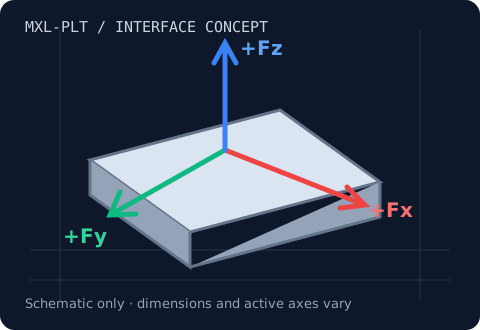
Milling, turning and drilling create different load spectra and fixture requirements. Define the cutting axes, normal/shear capacity, any required torque component, the tool/workpiece offset and the mounting structure. The measurement assembly should not introduce an unacceptable compliance or resonance into the test.
Strain-gauge and piezoelectric dynamometers solve different measurement problems. A strain-gauge configuration can support static and dynamic loading within its verified bandwidth, while the complete dynamic response still depends on the structure, sensor and electronics. No absolute zero-drift or universal bandwidth advantage is claimed.
Pin-on-disk and other tribology tests need synchronized normal and tangential channels, alignment and sufficient normal load. Specify temperature, lubricant/coolant exposure, fixture preload and the analysis conditions. For drilling with axial force and torque, choose the Fz/Mz review route rather than a two-force sensor.